Published
For people who own an HDB flat, quarterly resale data is a rough scorecard on their biggest asset. The third-quarter flash numbers reported by Little Big Red Dot offer a mild one: a small slip in prices, a solid count of deals.
The price line
The HDB resale price index slid 0.2 per cent in the third quarter to 202.4, from 202.8. It is the third quarterly dip in a row, following 0.3 per cent in the first quarter and 0.1 per cent in the second. A year earlier, in the third quarter of 2025, the index stood at 203.7 after a 0.4 per cent gain. So the index sits a little below where it was twelve months ago, but only by about 1.3 points. Nothing in the figures resembles a sharp correction, though three small dips in a row are worth noting for anyone with a sale date in mind.
The volume line
Transactions tell a firmer story. As of 29 September, 7,528 resale deals had been recorded in the quarter, which is 5.2 per cent more than the 7,157 in the same quarter of 2025. Small price dips paired with lively turnover are a combination worth noting, because it shows that a softer index does not by itself mean a stalled market, and that ownership decisions can be made on household timing. Mild price movement alongside busy trading suggests that sellers and buyers are still finding each other. For an owner thinking about selling, that matters as much as the index level, because a sale needs a buyer on a given day, not an average. Landlords who rent out a flat face a related question, namely whether to keep holding or sell, and that choice rests on rental yield and personal finances that no resale index captures.
What it means for an upgrade plan
Many owners treat a flat sale as the first step toward something larger, such as an executive condominium. A softer index means the sale proceeds may be slightly lower than hoped, while an EC's price is set separately by the developer. Neither side of that equation is predicted by a flash estimate, and the final statistics may differ from it. Cash, CPF and loan limits matter at least as much as the headline index, so a household would do well to run its own numbers. The five-year Minimum Occupation Period that applies to this development also shapes how long an owner would stay put once the purchase completes.
A Woodlands example
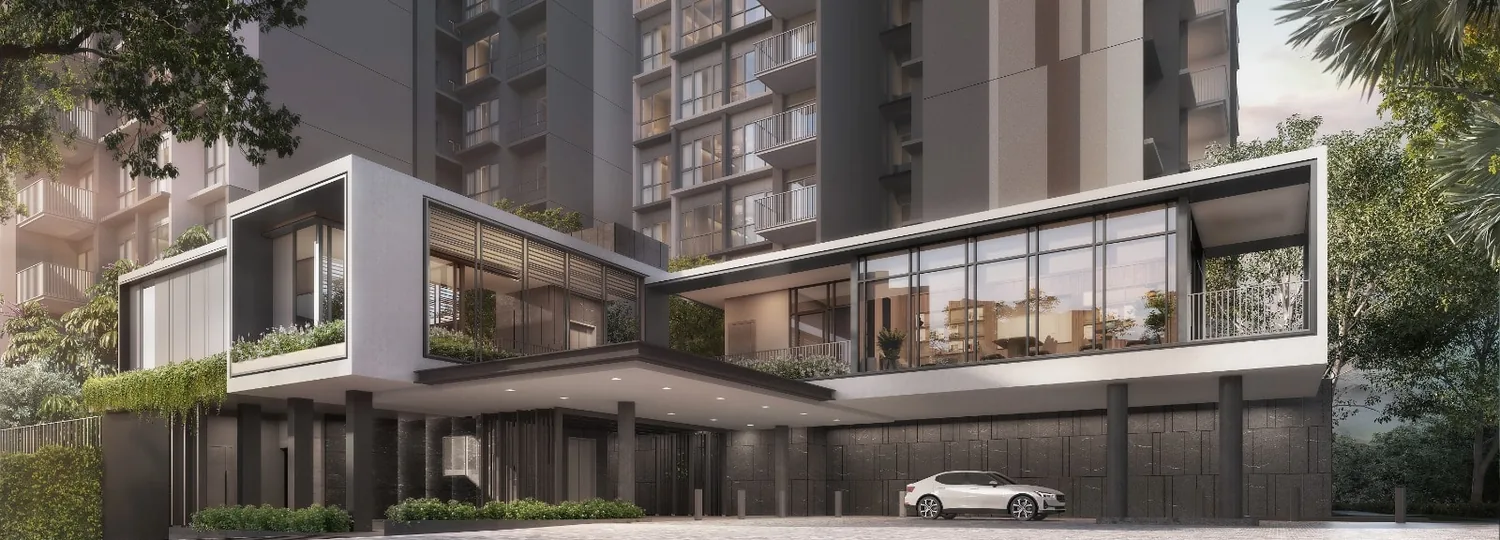
Wynwood Grand EC is a project that owners in this position sometimes study. City Developments Limited is developing a 99-year leasehold EC at Woodlands Drive 17 in District 25, with about 420 homes estimated across buildings of up to 17 storeys. Woodlands South MRT station on the Thomson-East Coast Line (TE3) is about 270 metres away, a walk of four to five minutes, and the site sits beside the Woodlands Healing Garden. The development keeps the S$16,000 household income ceiling, even after the ceiling rose to S$18,000 for tenders closing from 24 August 2026. Causeway Point and Woods Square are close by, and the Woodlands Health Campus is adjacent. The location page lays out what surrounds it.
Owners who want to talk through eligibility or timing can reach the marketing team via the contact page, and the homepage has the current launch notes.
General information only, not financial or legal advice.
Source: Little Big Red Dot. This article is independent commentary; Wynwood Grand EC is not affiliated with the parties mentioned.